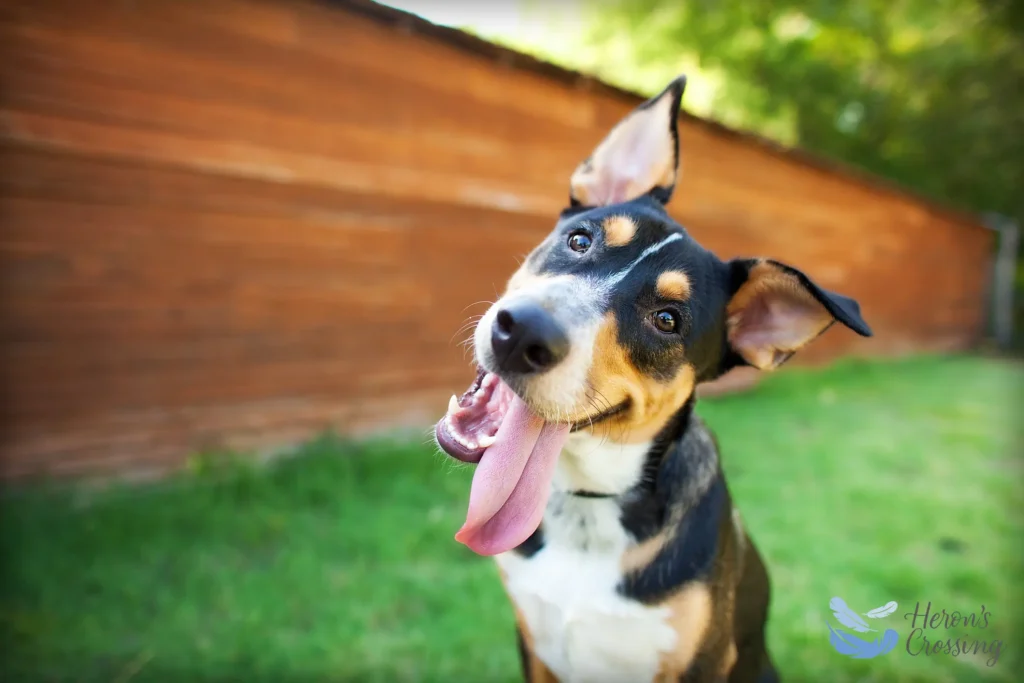
You say their favorite word—perhaps it’s “treat,” “walk,” or “squirrel”—and your dog instantly shifts their head to a perfect, heart-melting 45-degree angle. Their ears perk up, their brow furrows, and they lock their eyes onto yours with complete focus. It is one of the most endearing physical traits in the canine world, and we often pause just to admire how incredibly sweet they look in that moment. But what is actually happening behind those expressive eyes when they make this sudden, charming adjustment?
Separating Myth from Fact
To truly appreciate this behavior, it helps to look at what is happening from both a physical and behavioral perspective.
Myth: Dogs tilt their heads purely as an emotional response to show they understand us, or as a learned trick for attention.
Many families assume that dogs tilt their heads strictly to communicate that they are hanging on our every word or that they fully comprehend human language. It is also common to believe that dogs only do this because they have figured out it is a surefire way to get a smile, a belly rub, or an extra biscuit from their humans. While dogs are certainly masters at learning what makes us happy, this explanation only scratches the surface of their physical capabilities.
Fact: The head tilt is a functional adjustment to improve both hearing and vision.
While communication is definitely a piece of the puzzle, the head tilt is largely a physical, functional response. According to renowned veterinary behavior experts like the late Dr. Sophia Yin and professional animal behavior illustrator Lili Chin, dogs adjust their bodies to better process the sensory information coming from us.
First, let’s consider their hearing. A dog’s outer ear flaps act a bit like radar dishes. When we speak—especially when we use that high-pitched, enthusiastic tone to talk about outdoor adventures—the sound waves strike their ears at slightly different times. By tilting their head, your dog shifts the position of their ears to precisely pinpoint the exact distance and location of the sound, making it much easier to distinguish your words.
Second, their vision plays a massive role. Dogs with longer muzzles actually experience a physical obstruction when looking straight ahead. As beautifully illustrated in the canine behavior guides by Lili Chin, a dog with a prominent snout often tilts their head to physically see past their nose. This quick tilt gives them a clear, unobstructed view of our lower faces. Because dogs rely heavily on reading our facial expressions and mouth movements to understand our emotions, changing their head angle allows them to see us much more clearly.
When to Watch For a Medical Concern
While a typical head tilt is a normal part of daily life, it is important to know when this physical trait shifts from a behavioral cue to a medical symptom. A healthy, behavioral head tilt happens directly in response to a sound or a cue, and your dog will quickly reset their head to a straight position once the interaction is over.
However, if you notice a persistent, constant head tilt that does not reset, it warrants a bit more attention. A continuous tilt, especially if it is accompanied by frequent scratching at the ears, head shaking, or a lack of balance, can indicate an underlying issue like an ear infection or a vestibular condition.
Here in the Atlanta area, our intense Georgia humidity can create a prime environment for moisture retention and yeast growth inside a dog’s ear canals. Whether your pup has been enjoying a humid morning walk or simply relaxing in the backyard, those ears can easily trap damp air. If you ever notice a continuous head tilt that stays fixed throughout the day, we recommend scheduling a quick checkup with your primary care veterinarian to ensure their ears stay healthy and comfortable.
A Beautiful Connection
Your dog is constantly studying you, adjusting their ears and muzzle just to understand your voice and your facial expressions a little better. It is a beautiful testament to how deeply connected they are to your daily life. Every little shift of their head is simply their way of tuning into your world and staying close to the person they love most.
Heron’s Crossing provides end-of-life care for pets in the Metro Atlanta area. In-home appointments with compassionate vets are available. If you’d prefer a home-like setting away from your home, our Decatur office is also available by appointment.