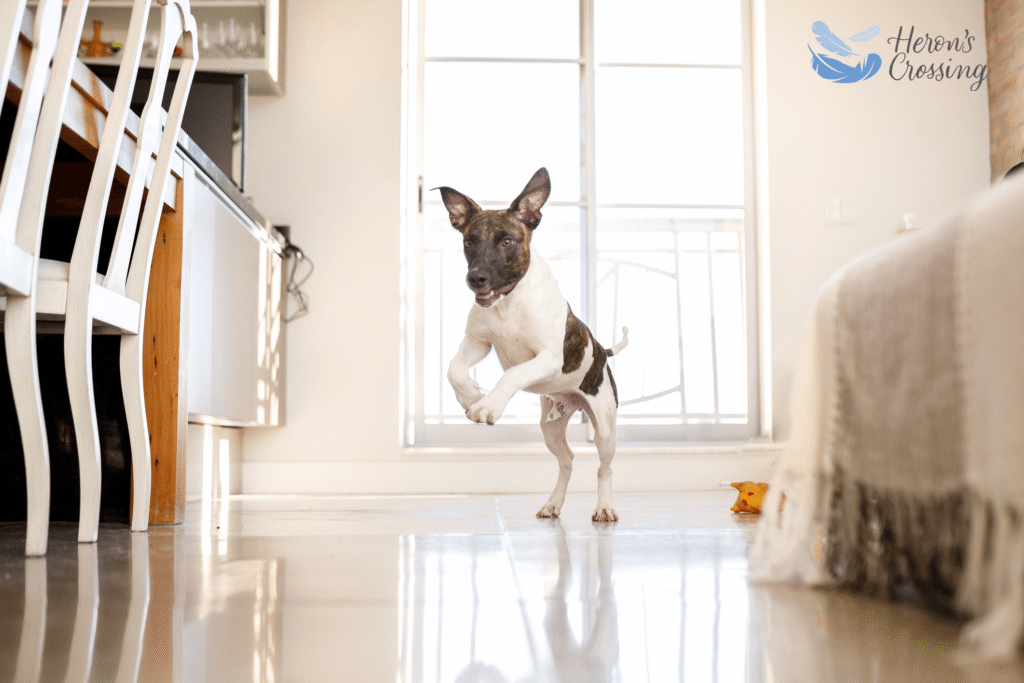
You’re finally relaxing on the sofa after a long day, perhaps watching the evening news or reading a book. Suddenly, the vibe in the room changes. Your dog tucks their tail, lowers their rear end, and launches into a high-speed, frantic lap around the living room furniture.
It is a moment of pure, unbridled energy—a physical expression of the deep comfort they feel in your home. But as furniture slides and rugs ruffle, you might ask yourself: Is this “crazy” behavior actually normal? And what is my dog trying to tell me?
The Science of FRAPs
While we affectionately call them the “zoomies,” veterinary experts technically refer to these episodes as Frenetic Random Activity Periods, or FRAPs. According to resources from Fear Free Happy Homes, these bursts are a completely normal part of dog behavior.
Think of FRAPs as a pressure valve. They are often a way for dogs to discharge built-up energy or release pent-up nervous tension. You have likely seen the common triggers in your own home: the relief felt after a bath (the “post-bath boogie”), the excitement of you walking through the door, or a “victory lap” after a successful potty break.
Rest assured, this is rarely a sign of behavioral issues. In fact, it is usually a compliment. A dog who feels confident enough to lose control and run wild is a dog that feels safe in their environment.
Managing the Energy
While zoomies are healthy, a seventy-pound dog banking off the coffee table can be hazardous. Here are a few ways to keep the fun safe, keeping in line with positive reinforcement principles championed by the AVMA:
- Clear the “Track”: If you know your dog usually zooms in the living room, try to keep the area free of tripping hazards or sharp corners.
- Traction is Key: Hardwood floors can be slippery speedways. Using non-slip rugs helps prevent joint strain or “wipeouts,” which is especially important for our senior dogs who still have a puppy heart.
- Check the Body Language: Observe your dog while they run. “Soft” eyes, a loose mouth, and a wiggly body indicate playfulness. However, if the body seems stiff or they are frantically trying to hide under furniture, the zoomies might be a response to fear or overstimulation rather than joy.
- Mental Enrichment: If the zoomies seem to happen constantly out of boredom, try introducing “brain games.” Food puzzles or snuffle mats can help channel that mental energy into something constructive.
If you notice any limping after a session, or if the frequency of these bursts changes suddenly, it is always a good idea to consult your primary care veterinarian to rule out any underlying physical discomfort.
The “Post-Walk” Zoomie
Living in Atlanta adds a unique flavor to the zoomies. We all know how oppressive the Georgia humidity can be. Often, a dog may sluggishly finish their walk, only to get the zoomies the instant they step back into the air conditioning. This is often a celebratory cooling-down ritual—a reaction to the relief of escaping the heat.
Additionally, during our intense pollen seasons, a dog might zoom after coming inside because they are physically overstimulated by itchy skin. If you suspect the yellow dust is to blame, consider wiping their paws and coat down with a damp cloth after outdoor play.
Embracing the Chaos
Ultimately, a dog who zooms is usually a dog who feels happy, safe, and loved. You know your dog better than anyone else. By observing these quirks with a kind and watchful eye, you are providing the best possible care for your companion. So the next time they tuck their tail and run, just clear the way and enjoy the show.
Heron’s Crossing provides end-of-life care for pets in the Metro Atlanta area. In-home appointments with compassionate vets are available. If you’d prefer a home-like setting away from your home, our Decatur office is also available by appointment.