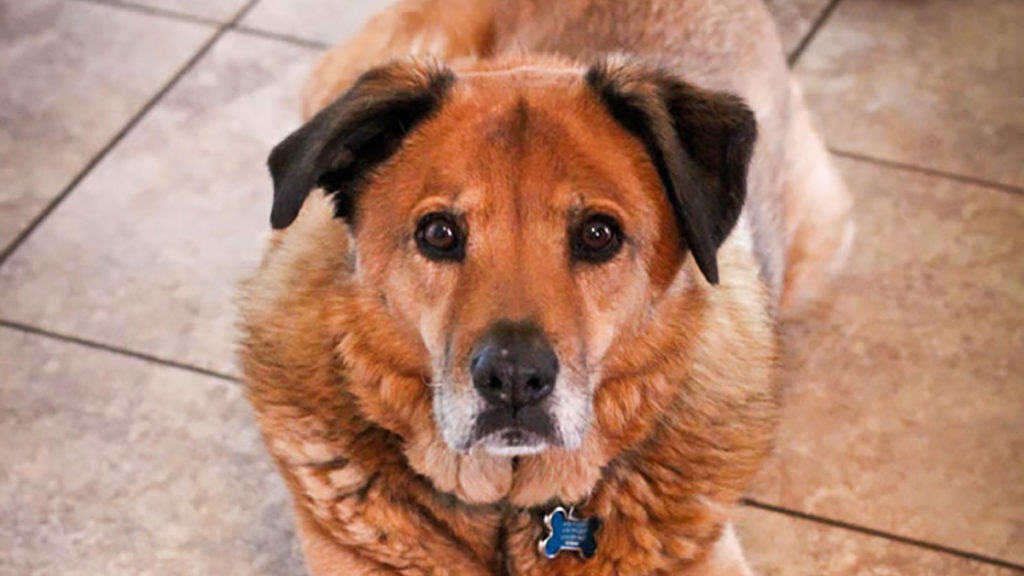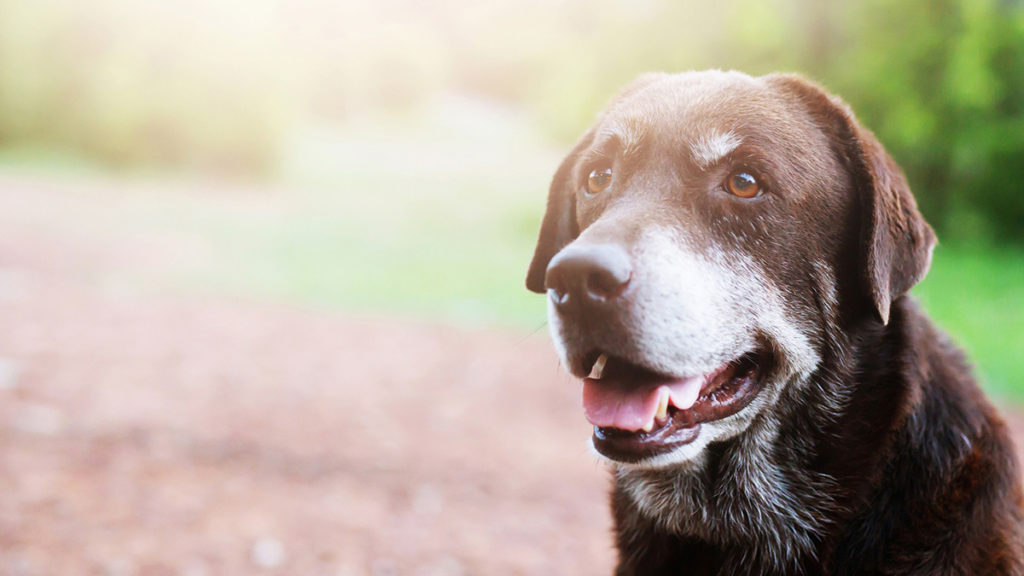
A sudden, heavy summer thunderstorm rolling through Atlanta brings more than just a break in the Georgia humidity—it often brings a noticeable shift in our senior companions. You might look over on a damp morning and notice your older dog or cat rising much more slowly from their bed, or hesitating at the bottom of the stairs. This is not a coincidence. Rapid barometric pressure drops cause the tissues around arthritic joints to expand and contract, triggering sudden stiffness and localized discomfort. When these local weather shifts hit, there are gentle ways we can help soothe their aches right at home.
Preparing a Fear Free Comfort Zone
Before beginning, it is essential to create a dedicated comfort zone. Lay down a thick, non-slip orthopedic mat or yoga mat in a quiet, climate-controlled room away from household traffic, and gather a few low-calorie, high-value treats. According to the American Animal Hospital Association (AAHA) Senior Care Guidelines, older pets with osteoarthritis experience severe anxiety on slick surfaces like hardwood or tile because their weakened muscles struggle to stabilize them. Providing a secure, non-slip surface instantly lowers their cortisol levels and relaxes their muscles.
Always seek approval from your primary care veterinarian before starting any home care routine. Massage is an incredible supportive measure, but it is strictly contraindicated over active areas of infection, open wounds, skin conditions, or acute spinal injuries like Intervertebral Disc Disease (IVDD).
Senior pets can be protective of sore limbs and may initially resist settling down. Never force your pet into a specific position, like laying on their side. Instead, let them sit, stand, or lie down however they feel most stable, using treats to build a positive association with the training space.
The Step-by-Step Massage Guide
- Effleurage (The Gentle Warming Stroke)
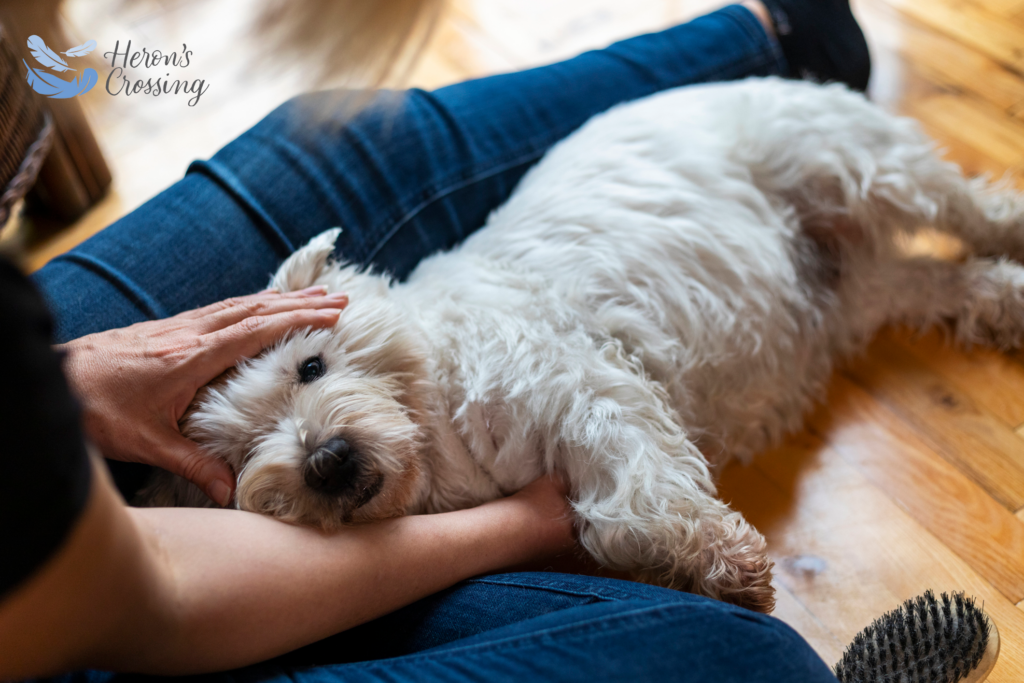
Use the flat, relaxed palm of your hand to apply incredibly light, rhythmic pressure. Start at the base of the skull or neck and glide slowly down the back, completely avoiding direct pressure on the bony spine itself, moving toward the base of the tail. As noted by Veterinary Partner, this technique stimulates the parasympathetic nervous system to induce deep relaxation. Physically, it increases local blood circulation and lymphatic drainage, warm-starting the muscle tissue and preparing it for deeper touch. If you move too quickly, you might trigger a protective muscle-bracing reflex. Fix this by moving at a glacial pace, matching the speed of your hand to the slow rhythm of your pet’s natural resting breath. - Gentle Muscle Kneading (Petrissage-Lite)
Move your hands to the large muscle groups surrounding the major joints—specifically the thigh muscles above the knee, or the shoulder muscles. Use the soft pads of your fingers to make tiny, gentle circular motions, gently manipulating the soft tissue. Crucial: Never press directly on the joint capsule, bone, or any arthritic nodules. When a pet has arthritis, they alter their gait to compensate, causing surrounding muscles to work overtime and develop painful secondary muscle spasms. Kneading releases this compensatory tension and increases tissue elasticity. If your pet pulls their leg away, decrease pressure immediately, slide your hand back to a non-painful area like the chest or neck to restore trust, and reward them with a treat. - Low-Stress Body Language Monitoring
Actively scan your pet’s face and torso for micro-expressions throughout the session. We utilize the low-stress handling principles outlined by Dr. Sophia Yin and illustrator Lili Chin to monitor their comfort level. Signs of comfort include long sighs, softening eyes, licking lips, or sinking their weight into your hands. Signs of silent discomfort include a sudden widening of the eyes (whale eye), a tense or freezing posture, a quick look back at your hand, or subtle skin twitching along the back. Older pets rarely cry out when uncomfortable, so if you spot a silent discomfort signal, stop the massage entirely and switch to simple, passive, loving contact.
Tangible Comfort
You do not need to be a licensed physical therapist to dramatically improve your pet’s quality of life. Dedicating just ten quiet minutes on the floor to gently soothe your pet’s aching muscles is a profound act of love. It builds immense trust and provides a comforting, tangible way to say “I’ve got you” during a tough Atlanta weather shift.
Heron’s Crossing provides end-of-life care for pets in the Metro Atlanta area. In-home appointments with compassionate vets are available. If you’d prefer a home-like setting away from your home, our Decatur office is also available by appointment.