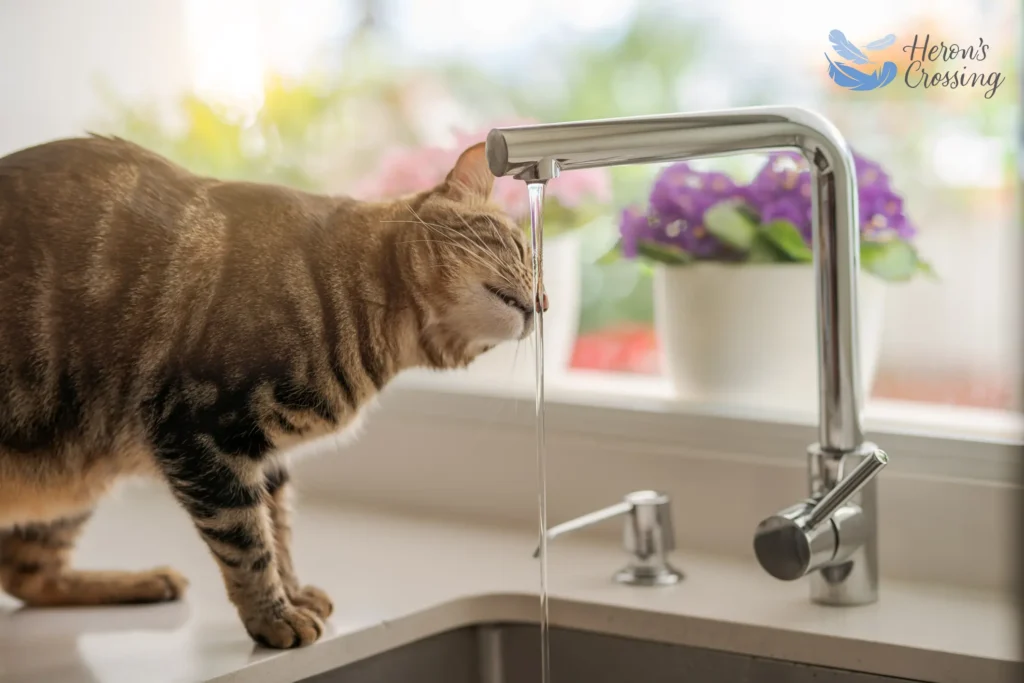
Have you ever walked into your bathroom only to find your cat perched on the edge of the sink, intently staring down the faucet or batting at a stray drip? In the quiet moments of an Atlanta morning, this quirky behavior is one of those endearing traits that reminds us how much personality our feline friends truly have. While it might seem like a simple game, your cat’s preference for “tap service” over their water bowl is actually rooted in their natural instincts and unique sensory needs.
The Evolutionary Call of Running Water
Your cat’s fascination with the faucet isn’t just a whim; it is a behavior passed down from their wild ancestors. The experts at the Cornell Feline Health Center note that in nature, standing water is often a breeding ground for bacteria and parasites. Cats have an ancestral preference for running water because it is likely cleaner and safer than a stagnant puddle.
Beyond safety, there is a major sensory appeal. Cats can hear the distinct sound of running water and see its movement, which makes it far more interesting than a silent, still bowl. There is also the matter of “whisker fatigue.” Because a cat’s whiskers are incredibly sensitive, they can experience discomfort when their whiskers touch the sides of a deep or narrow bowl. A stream of water from the faucet allows them to drink without any irritating contact.
Keeping it Fresh in the Georgia Heat
Living in the South adds another layer to this behavior. With the high humidity and heat we experience in Georgia, standing water in a bowl can quickly become warm or develop a “slimy” film known as biofilm. This makes the cool, oxygenated water from a tap much more appealing. Additionally, while Atlanta’s tap water is safe, some cats are particularly sensitive to the smell of chlorine; the movement of the faucet or a filtered system can help dissipate that scent.
Simple Ways to Support Your Cat’s Hydration
Helping your cat stay hydrated is a wonderful way to support their long-term health. Based on guidelines from the American Animal Hospital Association (AAHA), here are a few ways to make drinking water more inviting for your cat:
- Switch to a Cat Fountain: A recirculating fountain provides the movement and sound cats crave while using filters to keep the water tasting fresh.
- Choose the Right Bowl: Opt for wide, shallow bowls made of ceramic or stainless steel to prevent whisker contact.
- Location Matters: Place water stations in quiet, low-traffic areas of your home where your cat feels safe and undisturbed.
- Refresh Daily: Wash water bowls every day with mild soap and water to prevent bacteria buildup, and consider offering multiple stations throughout your house.
When to Call Your Vet
While most faucet-drinking is just a personality quirk, keep a close eye on any changes. If your cat’s interest in the faucet is brand new or if you notice they are suddenly much thirstier than usual, it is a good idea to consult your primary care veterinarian. According to the AVMA, increased thirst can sometimes be an early sign of underlying health issues like kidney disease or hyperthyroidism.
Paying attention to these small details is a beautiful sign of how much you care for your companion. By honoring their natural instincts and making a few small adjustments at home, you are creating a more comfortable, enriched environment for them to thrive in.
Heron’s Crossing provides end-of-life care for pets in the Metro Atlanta area. In-home appointments with compassionate vets are available. If you’d prefer a home-like setting away from your home, our Decatur office is also available by appointment.