Imagine a beautiful, crisp morning stroll along the bustling Atlanta BeltLine. Your dog is trotting happily by your side when they suddenly swoop down and scoop up a discarded, hazardous chicken bone from the pavement. In that split second, your chest tightens, panic sets in, and an exhausting, high-stakes game of keep-away begins. It is a stressful moment that nearly every dog owner faces, but reacting with panic or physical force can actually cause the situation to backfire.
When our dogs grab something forbidden, our natural instinct is to rush in and pry their jaws open. However, experts at Fear Free Happy Homes explain that forcefully ripping an object out of a dog’s mouth triggers intense anxiety and can accidentally cultivate “resource guarding”—a stressful behavior where a pet becomes overly protective, secretive, or defensive over items. To build a reliable, life-saving response, we must look to the positive reinforcement methodologies championed by world-renowned behavior experts like Victoria Stilwell and Karen Pryor.
Think of your training rewards as a combination of simple motivators and genuine connection. In the quiet sanctuary of your living room, a piece of standard dry kibble might successfully buy your pet’s cooperation. While a highly distracting environment can challenge this cooperation, training with low-value treats combined with affection ensures that your dog will always respond properly to the command. Instead of carrying high-stakes rewards like cheese, hot dogs, or freeze-dried liver on walks, pairing a basic, low-value treat with physical and verbal affection serves as your emergency safety net. Having this combination ready ensures you can always successfully handle a dangerous real-world distraction without needing to rely on specialty foods.
Your Low-Stress Step-by-Step Guide
Teaching this command should feel like a cooperative game rather than a battle of wills. Here is how to build a rock-solid foundation at home before taking your skills out into the world.
- The Low-Stakes Trade: Start in a quiet, distraction-free room inside your house. Offer your dog a low-value item, like a basic rubber toy they enjoy but aren’t deeply obsessed with. Once they have it comfortably in their mouth, gently hold a low-value treat right next to their nose while offering warm, genuine affection to encourage them.
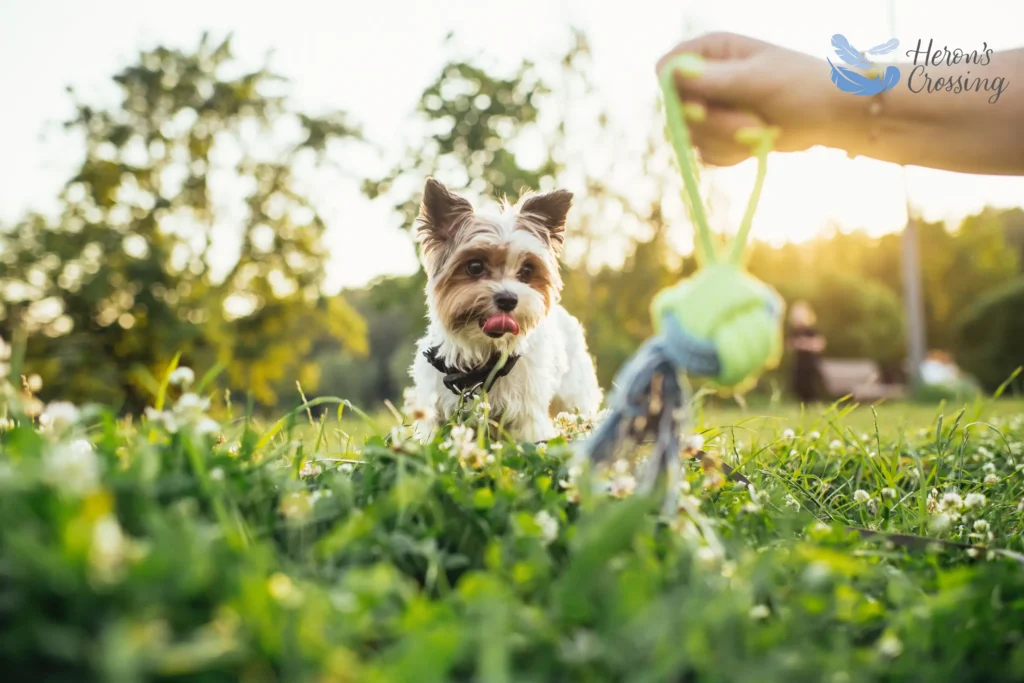
- Name the Action and Scatter: The moment your dog opens their mouth to sniff or take the treat, drop the toy completely and clearly say, “Drop it.” Renowned positive reinforcement trainer Victoria Stilwell recommends a brilliant pro-tip for this stage: instead of handing the treat directly to their mouth, scatter a few pieces on the ground. This naturally directs their eyes and jaw downward, creating physical space between your dog and the discarded object. Praise them warmly.
- Return the Prize: If the toy they dropped is completely safe, pick it up and give it right back to them. Doing this repeatedly shatters the canine myth that “drop it” means the fun ends permanently. It teaches them that cooperating with you actually doubles their rewards.
- The Slot Machine Transition: Once your dog reliably drops the toy at home, it is time to transition their brain to the real world. Clicker training pioneer Karen Pryor describes a concept known as the “Variable Schedule of Reinforcement,” which functions much like a casino slot machine. Once a behavior is firmly understood, you stop rewarding every single repetition. Instead, reward them unpredictably. Because the dog doesn’t know which “pull of the lever” will pay out the jackpot of a simple treat combined with your heartfelt affection, they become incredibly eager, persistent, and focused on performing the behavior.
- Pre-set Real-World Generalization: Do not wait for a real-life emergency to test this on a walk. Proactively practice a few times a week by casually “pre-setting” the environment. Drop boring, safe household items in your backyard or driveway while your dog is on a leash. Practice the trade game in these controlled outdoor spaces before gradually testing their skills around the heavy, exciting distractions of local busy Atlanta parks.
A Journey Built on Mutual Respect
True behavior modification is never about dominance or control; it is about building a deep, reliable language of trust between you and your pet. If your dog struggles with street hazards or exhibits intense resource guarding that causes you safety concerns, remember you can always consult your primary care veterinarian or a certified professional dog trainer for personalized, one-on-one guidance.
Tonight, take a few minutes to simply sit on the floor and observe how eagerly your dog looks to you when you speak. When they know that cooperating with you always brings safety and good things, your bond becomes an unbreakable safety net.
Heron’s Crossing provides end-of-life care for pets in the Metro Atlanta area. In-home appointments with compassionate vets are available. If you’d prefer a home-like setting away from your home, our Decatur office is also available by appointment.